Narendra Modi Biography: Early Life, Career, Family & Net Worth
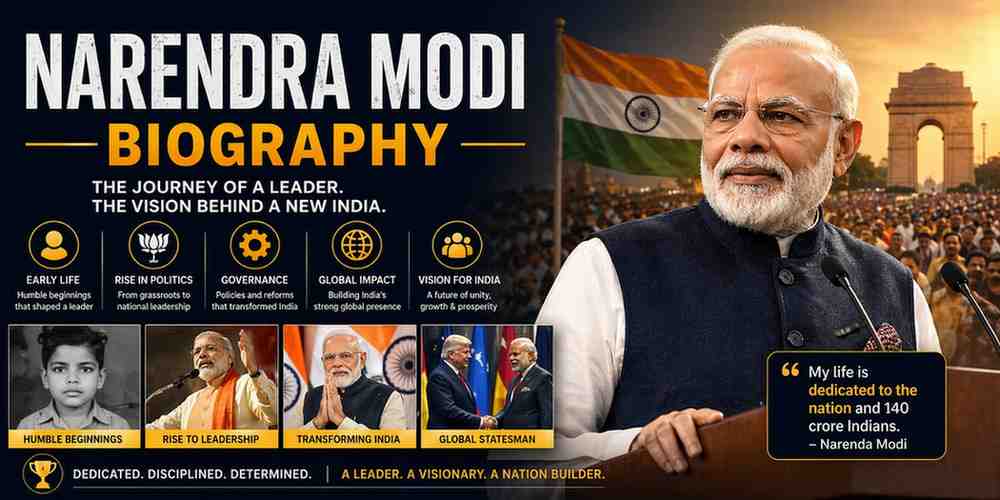
Narendra Modi (born September 17, 1950) is an Indian politician who has served as Prime Minister of India since 2014. Modi served as Gujarat’s chief minister from 2001 to 2014 and is currently a member of parliament for Varanasi.
He is a member of the Bharatiya Janata Party (BJP) and the Rashtriya Swayamsevak Sangh (RSS), a right-wing Hindutva paramilitary volunteer organization. He is the longest-serving prime minister outside of the Indian National Congress.
Under Modi’s leadership, India has experienced democratic backsliding, or the undermining of democratic institutions, individual rights, and free expression. As prime minister, he has continuously enjoyed strong approval ratings.
Modi has been portrayed as orchestrating a political realignment toward right-wing politics. He remains a divisive figure both locally and internationally due to his Hindu nationalist ideas and management of the Gujarat riots, which have been used to demonstrate a majoritarian and exclusionary social agenda.
Narendra Modi Biography
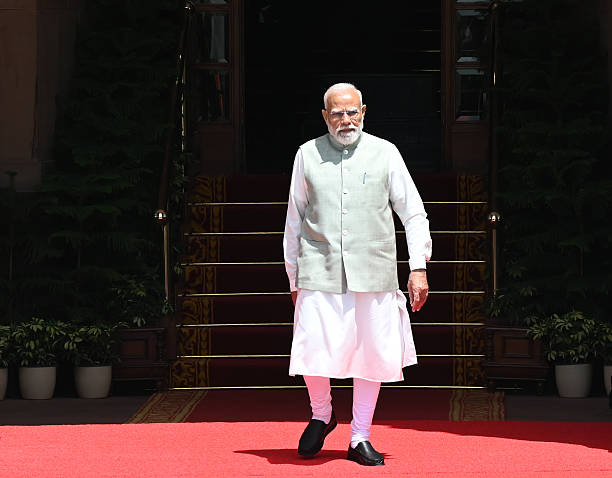
Narendra Damodardas Modi was born on September 17, 1950, in Vadnagar, Mehsana district, Bombay State (present-day Gujarat), to a Gujarati family of Other Backward Class (OBC) origin and Hindu faith.




Modi finished his higher secondary education at Vadnagar in 1967; his instructors described him as an average student and a sharp, brilliant debater with a passion for theatre. He enjoyed playing larger-than-life characters in theater shows, which affected his political image.
When Modi was eight years old, he was introduced to the Rashtriya Swayamsevak Sangh (RSS) and began attending local shakhas (training sessions).
There he met Lakshmanrao Inamdar, who inducted Modi as a balswayamsevak (junior cadet) in the RSS and later became his political mentor. While studying with the RSS, Modi met Bharatiya Jana Sangh stalwarts Vasant Gajendragadkar and Nathalal Jaghda, who helped establish the BJP’s Gujarat chapter in 1980. As a teenager, he enlisted in the National Cadet Corps.
Modi graduated from Delhi University’s School of Open Learning in 1978 with a Bachelor of Arts (BA) in political science. He earned a Master of Arts (MA) in political science from Gujarat University in 1983, graduating first class as an external distance learning student. There is doubt regarding the legitimacy of his BA and MA degrees.
Career
In the early 1970s, he joined the pro-Hindutva Rashtriya Swayamsevak Sangh (RSS) and established an Akhil Bharatiya Vidyarthi Parishad unit in his neighborhood.
Modi steadily progressed in the RSS leadership, and his association with the organization aided his eventual political career.
Modi joined the BJP in 1987, and a year later was appointed general secretary of the Gujarat branch of the party. He was essential in significantly increasing the party’s representation in the state in subsequent years.
Modi was a member of the BJP’s coalition government in the state in 1990, and he helped the party win the 1995 state legislative assembly elections, which allowed the party to become India’s first BJP-controlled government in March.
However, the BJP’s dominance of the state administration lasted only until September 1996. Modi was appointed secretary of the BJP’s national organization in New Delhi in 1995, followed by general secretary three years later.
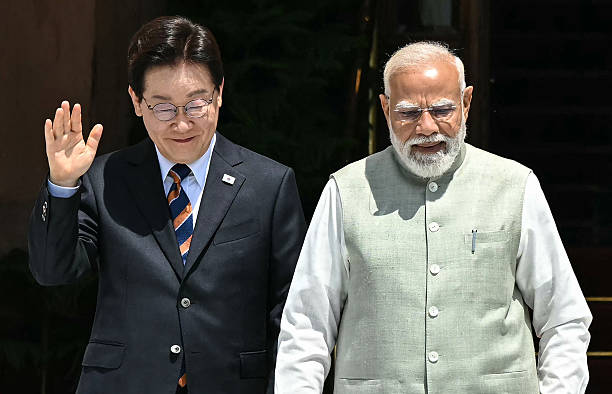
He remained in that position for another three years, but in October 2001, he replaced the incumbent Gujarat chief minister, fellow BJP member Keshubhai Patel, after Patel was held accountable for the state government’s inadequate response to the massive Bhuj earthquake in Gujarat earlier that year, which killed over 20,000 people. Modi ran in his first election, a by-election in February 2002, and won a seat in the Gujarat State Assembly.
Modi’s political career has been marred by controversy since. His participation as chief minister during Gujarat’s communal violence in 2002 was particularly questioned.
He was accused of supporting the violence or, at the very least, of doing little to prevent the massacre of over 1,000 people, predominantly Muslims, that occurred after dozens of Hindu passengers were killed when their train was set on fire in Godhra.
The United States denied him a diplomatic visa in 2005, citing his role in the 2002 riots, while the United Kingdom did the same. Although Modi was not indicted or censured in the years that followed, either by the judiciary or by investigating agencies, some of his close colleagues were found guilty of participation in the 2002 events and sentenced to severe prison terms.
Modi’s repeated electoral success in Gujarat, on the other hand, established him as an indispensable leader inside the BJP hierarchy and catalyzed his return to the political mainstream.
Under his leadership, the BJP won 127 of the 182 legislative assembly seats in December 2002 (including one for Modi). Projecting a manifesto for growth and development in Gujarat, the BJP won again in the 2007 state assembly elections, this time with 117 seats, and again in the 2012 polls, with 115 seats. Modi won both polls and was re-elected chief minister.
During his tenure as Gujarat’s chief minister, Modi built a strong reputation as an effective administrator, and he was credited with the state’s rapid economic growth.
Furthermore, his and the party’s election successes aided Modi’s position as not just the most powerful leader inside the party, but also a potential candidate for Prime Minister of India. In June 2013, Modi was named the BJP’s campaign leader for the 2014 Lok Sabha elections.
Narendra Modi Wife
Prime Minister Narendra Modi is lawfully married to Jashodaben Narendrabhai Modi. He has lived apart from her for the majority of his life. This truth became widely known during his political career.
Narendra Modi Net Worth
Narendra Modi’s net worth is expected to be at ₹3.02 crore ($400,000-$500,000). His fortune is mostly derived from his salary as Prime Minister, as well as fixed deposits and savings, indicating a moderate lifestyle without significant assets or luxury homes.