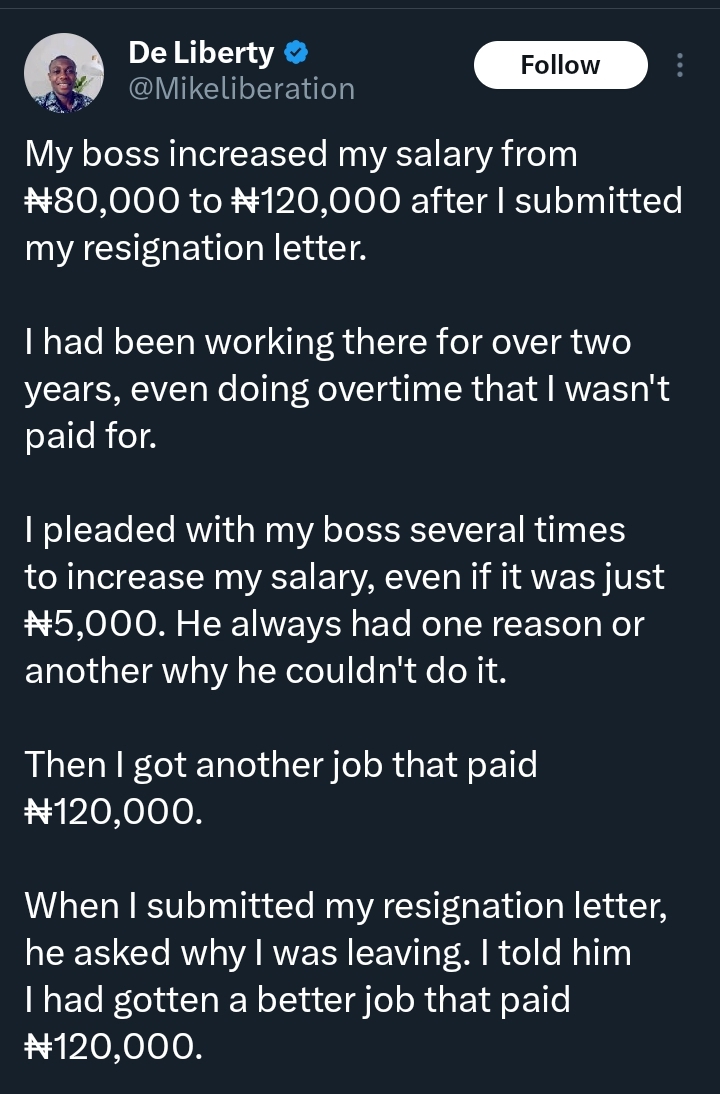
“My boss increases my salary from ₦80k to ₦120k after I submitted my resignation letter” — X User

A viral social media post has sparked reactions online after a worker shared how his salary was increased only after submitting a resignation letter.
The story highlights workplace frustration, delayed recognition, and employee retention issues.
The employee said he had worked for over two years at a salary of ₦80,000, including unpaid overtime. He also claimed several requests for a pay increase were ignored.
Resignation triggers sudden salary offer
According to the viral post, the situation changed only when he secured another job paying ₦120,000 and submitted his resignation letter.
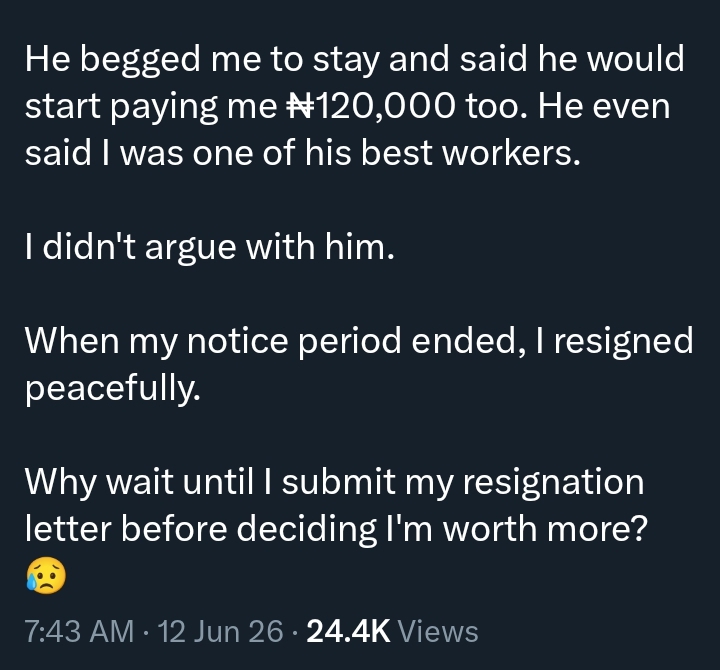
He explained that his boss, upon receiving the resignation, immediately asked why he was leaving and tried to convince him to stay. The employer then offered to match the new salary.




The worker stated that he did not argue, but completed his notice period and left peacefully.
He also questioned the timing of the offer, asking why his value was only recognised after he decided to resign. The post has since triggered discussions about fair pay and employee treatment in the workplace.
Public Reactions
Tuxil-D wrote: “While reading, I was afraid he might stay back. Good he left. I know of a person who decided to stay back, because they finally increased his salary when he turned in his resignation.
You know what they did to him? After just two months, they disengage (sack) him. They used the two months to restructure and reorganize things without him suspecting anything. He had already missed the opportunity he had. He became jobless.”
Monkeyiobe wrote: “The money was sitting there the whole time; your boss just needed confirmation that someone else had already decided you were worth it before he believed it himself. That is how most workplaces are actually built, and it has nothing to do with loyalty.”
Emeka wrote: “Somene who refused to increase your salary with 5k waited until you got a job that was going to pay you 120k before matching the offer.
Practical example of ‘You never know the worth of something until you lose it’.”