FG considers pay raise for political office holders
The Revenue Mobilisation Allocation and Fiscal Commission (RMAFC) has signaled its intention to revise the salaries of Nigeria’s political office holders, arguing that the present pay structure is insufficient, outdated, and fails to reflect their growing responsibilities amid current economic realities.
This was stated during a press briefing in Abuja on Monday.
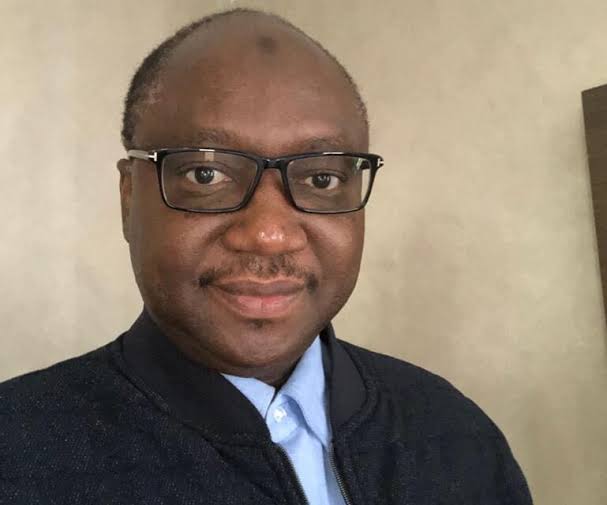
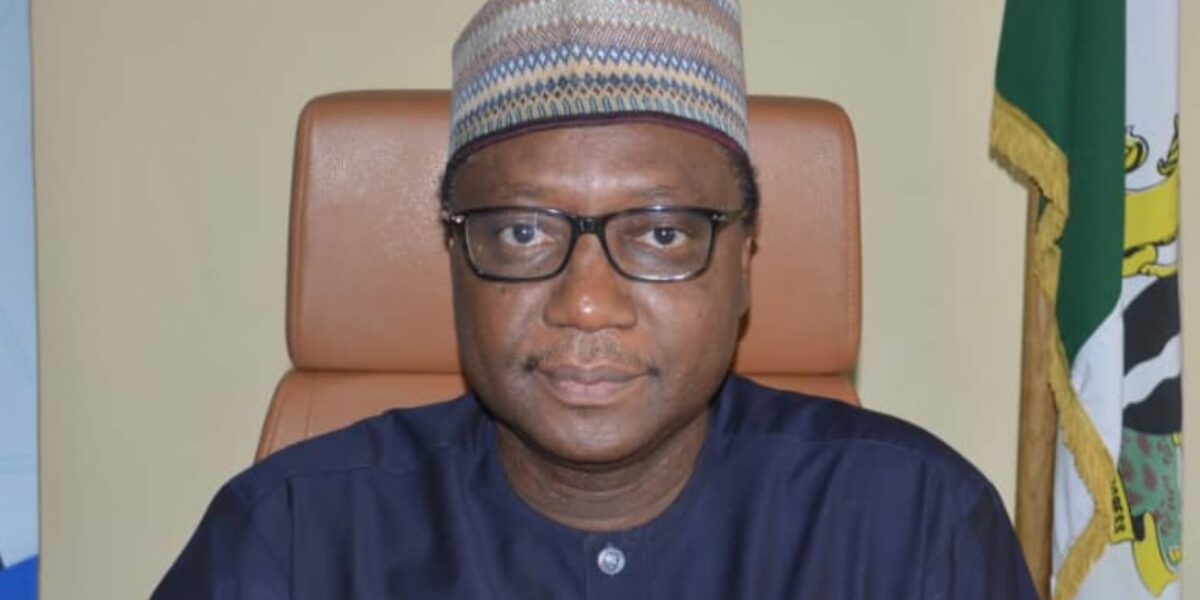
During a press conference in Abuja on Monday, RMAFC Chairman, Mohammed Shehu, revealed that President Bola Tinubu currently earns ₦1.5 million per month, while ministers receive less than ₦1 million, salaries that have remained the same since 2008.
Shehu said …
“You are paying the President of the Federal Republic of Nigeria N1.5m a month, with a population of over 200 million people. Everybody believes that it is a joke.”



He added …
“You cannot pay a minister less than N1m per month since 2008 and expect him to put in his best without necessarily being involved in some other things. You pay either a CBN governor or the DG ten times more than you pay the President. That is just not right. Or you pay him [the head of an agency] twenty times higher than the Attorney-General of the Federation. That is absolutely not right.”
However, the Nigeria Labour Congress (NLC) rejected the RMAFC’s proposal to increase the salaries of political office holders, arguing that such a move overlooks the country’s deepening inequality and the numerous hidden allowances that already boost government officials’ earnings.
At the Abuja press briefing, the RMAFC chairman clarified that the commission does not determine the minimum wage for civil servants or other public sector employees, but is constitutionally empowered to set the remuneration for political, judicial, and legislative office holders.
He said …
“We are strictly restricted to political office holders, governors, senators, legislators, ministers, DGs, and other people.”
Shehu further emphasized that, despite widespread public opposition to salary increases for politicians, it was necessary to ensure that their remuneration remained realistic and commensurate with the weight of their responsibilities.
“It’s about time that people like you and others should support the commission to come up with reasonable living salaries for ministers, DGs, and the President,” he explained.
Shehu also revealed that the RMAFC had initiated a long-overdue review of Nigeria’s vertical revenue-sharing formula, which dictates how federally generated revenues are distributed among the federal, state, and local governments. The existing arrangement, unchanged since 1992, allocates 52.68 per cent to the Federal Government, 26.72 per cent to the states, and 20.60 per cent to local governments.
In addition, 4.18 per cent is set aside for special funds: 1 per cent each for the Federal Capital Territory and the ecological fund, 1.68 per cent for the natural resources development fund, and 0.5 per cent for stabilisation.
“In line with this constitutional responsibility and in response to the evolving socio-economic, political and fiscal realities of our nation, the Commission has resolved to initiate the process of reviewing the revenue allocation formula to reflect emerging socio-economic realities,” Shehu told reporters.
He explained that recent constitutional amendments had increased the fiscal responsibilities of state governments.
“The situation has made it essential to re-evaluate the structure of fiscal federalism in order to foster economic growth in individual states, enabling them to become independent from the central government and ensuring equity, responsiveness, and sustainability,” he said.
Shehu noted that earlier attempts to revise the formula had failed. He pointed out that in 2022, under former Chairman Elias Mbam, the Commission submitted a report recommending 45.17 per cent for the Federal Government, 29.79 per cent for states, and 21.04 per cent for local governments.
However, the Muhammadu Buhari administration did not implement the recommendation. The revenue-sharing formula, which has been a contentious issue in Nigeria since before independence in 1960, defines the allocation of federally generated resources among the different tiers of government.
It also outlines the share of resources that must remain in the territories where they are generated, as well as the portion allocated to government agencies responsible for collecting revenues on behalf of the federation.
The existing revenue-sharing formula was introduced during the administration of former President Olusegun Obasanjo. Since then, there have been persistent calls and efforts to revise it to achieve a fairer distribution of national revenue.
In 2013, RMAFC conducted a nationwide consultation across the 36 states, engaging with key stakeholders in preparation for a review of the formula.
Findings revealed that political considerations, coupled with the implications of the Federal Government potentially losing its dominant share of the federation account, have been the main reasons for the prolonged delay in implementing a new revenue formula.