Who was Jesse Jackson? Age, Career, Legacy, Death, Wife, Children & Net Worth
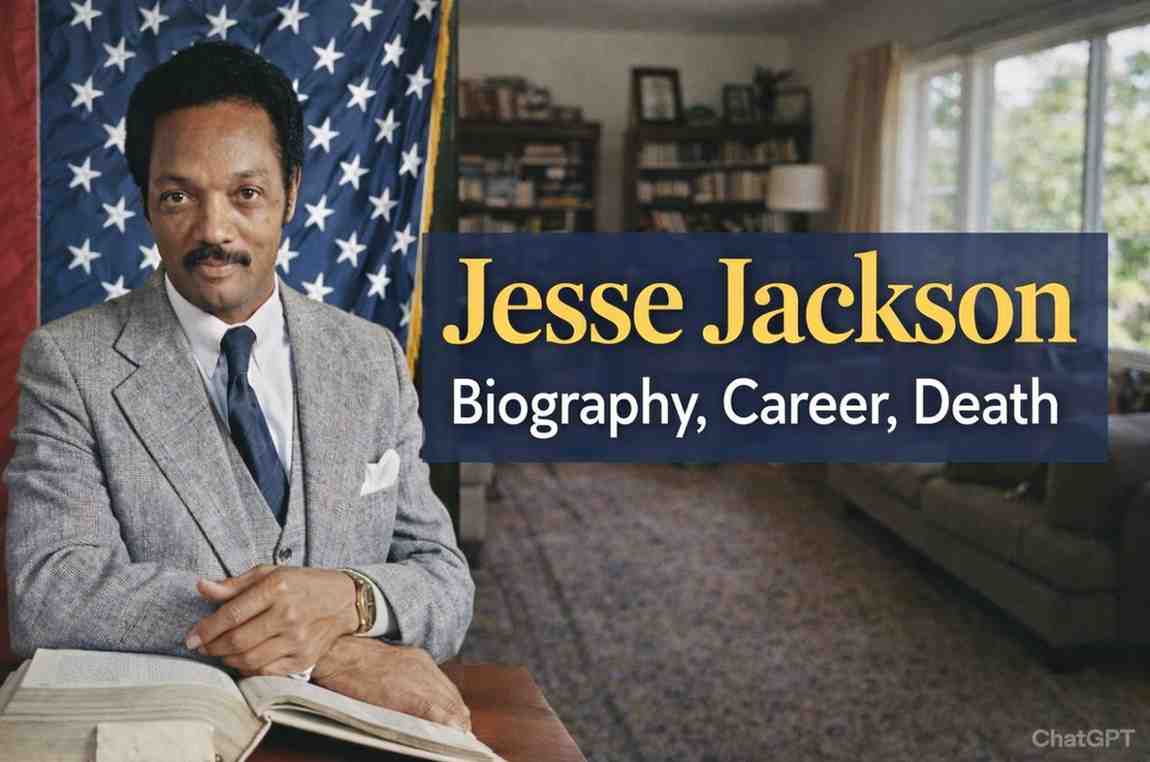
Jesse Jackson (October 8, 1941–February 17, 2026) was an American civil rights activist, politician, and ordained Baptist minister. He was Martin Luther King Jr.’s protégé during the civil rights struggle and went on to become one of the most important civil rights activists of the late twentieth and early twenty-first century.
From 1991 to 1997, he worked as a shadow delegate and senator for the District of Columbia. He was the father of Jonathan Jackson, a US Representative, and Jesse Jackson Jr., a former US Representative.
On Tuesday February 17th 2026, Jesse Jackson in his sleep at the age of 84.
Jesse Jackson Biography
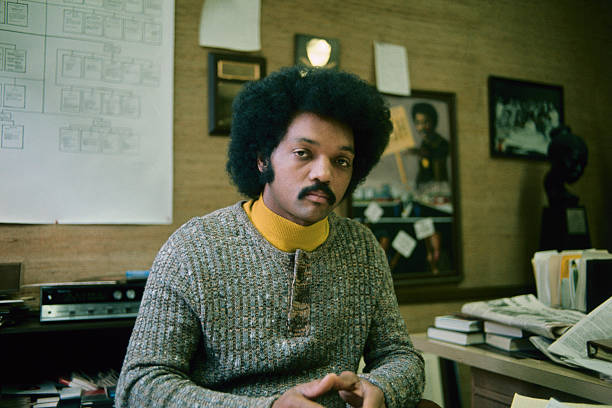
Jackson was born Jesse Louis Burns on October 8, 1941, in Greenville, South Carolina, to Helen Burns (1923-2015), an 18-year-old high school student, and Noah Louis Robinson (1908-1997), her married neighbour of 33 years. His ancestors include Cherokees, enslaved African-Americans, Irish plantation owners, and a Confederate sheriff.
Robinson, a former professional boxer, worked for a textile business and was a well-known figure in the Black community. A year after Jesse’s birth, his mother married Charles Henry Jackson, a post-office maintenance worker who would subsequently adopt him.




Jesse adopted his stepfather’s surname, but he had a close contact with Robinson throughout his childhood. He said he considered both guys to be his fathers.
Jackson received a football scholarship and attended the University of Illinois from 1959 to 1960. He then proceeded to the Agricultural and Technical College of North Carolina, a historically Black college, where he earned a B.A. in sociology in 1964.
Jackson completed graduate studies at the Chicago Theological Seminary but did not graduate; rather of becoming a reverend, he quit school to pursue one. (After King’s assassination in 1968, Jackson was ordained as a Baptist minister.)
Career
In 1965, Jackson marched alongside Martin Luther King, Jr. in Selma, Alabama. At 23, he exuded a preternatural confidence that King and one of his top lieutenants, Andrew Young, couldn’t ignore. King appointed him to lead Operation Breadbasket, a Southern Christian Leadership Conference (SCLC) initiative centred on economic issues.
However, in this job, Jackson’s freewheeling attitude was met with opposition from SCLC leaders who questioned Jackson’s financial management of the group. It would not be the first time Jackson’s leadership style was called into question.
Jackson was in Memphis, Tennessee, on the night of April 4, 1968, when King was slain. His acts following the catastrophe serve as a Rorschach test for his legacy.
Jackson, along with Young, Ralph Abernathy, and others, was in the Lorraine Motel when the fatal shot was fired. According to Young, Jackson dipped his hands in King’s blood and wiped them on the turtleneck he was wearing. He wore that garment for several days, including during nationally televised interviews where he remembered cradling King as he died.
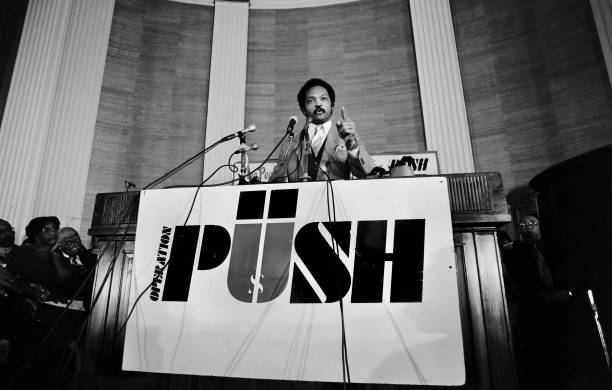
In 1971, Jackson departed Operation Breadbasket due to a disagreement with SCLC leader Abernathy. The two had a strained relationship since King’s assassination, and Jackson refused Abernathy’s request to relocate Breadbasket from Chicago to Atlanta. When Abernathy voiced concerns about Operation Breadbasket’s financial transactions, Jackson announced his departure and planned to launch his own group. Operation PUSH was born.
PUSH was initially an abbreviation for People United to Save Humanity, but it was eventually altered to People United to Serve Humanity. There is little doubt, however, that Jackson embraced the ambition of a higher title. PUSH’s aim was substantially similar to Operation Breadbasket’s, to assist Black teenagers battling with drug addiction and crime while also opposing racist economic practices.
PUSH organised a series of successful boycotts of large corporations whose policies harmed Black entrepreneurs and consumers, such as Coca-Cola, Burger King, and Revlon. The boycotts were so successful that even the prospect of a PUSH boycott prompted a business response. When Jackson revealed to Standard Oil that white station owners paid less for petrol than black owners, the firm launched an investigation.
Jackson broadened the scope of PUSH’s objective by establishing the National Rainbow Coalition in 1984, which advocated for equal rights for African Americans, women, and LGBTQ+ individuals. In 1996, these two organisations combined to establish the Rainbow PUSH Coalition.
In November 1983, Jackson launched his candidacy for president, stating,
“I seek the presidency to serve the nation at a level where I can help restore a moral tone, a redemptive spirit, and a sensitivity to the poor and dispossessed of this nation.”
In late 1983 and early 1984, he used both personal appeal and foreign policy skill to help win the release of downed American airman Robert Goodman, who had been abducted and held by the Syrian government. However, the candidate did not always help his own cause. Jackson ran for president again in 1988, this time finishing second to eventual nominee Massachusetts Gov. Michael Dukakis.
During the primaries, he had a delegate lead over Dukakis, but Dukakis’ campaign gained traction as worries about Jackson’s electability resurfaced. Jackson delivered what became known as the “Keep Hope Alive” speech at the Democratic National Convention in Atlanta that year.
Though he would never again run for president, Jackson continued his activism in the 1990s and into the twenty-first century, participating in events recalling the Bloody Sunday march across the Edmund Pettus Bridge and speaking at Black Lives Matter protests in the aftermath of George Floyd’s 2020 murder by a white police officer.
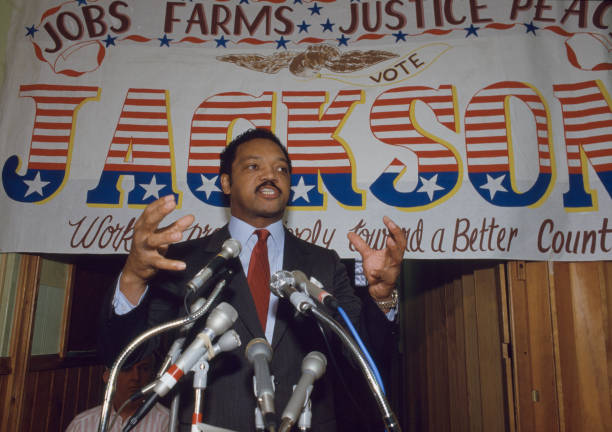
His radical ideals are credited with launching the political careers of Democratic Representative Alexandria Ocasio-Cortez of New York and independent Senator Bernie Sanders of Vermont. Sanders has stated that his presidential efforts are a continuation of Jackson’s presidential runs.
Jackson also faced scandal when it was revealed in 2001 that he had fathered a child out of wedlock, and his son, former Illinois Representative Jesse Jackson, Jr., was convicted of campaign fraud in 2013.
In 2008, when it became evident that another Black community organiser from Chicago would break down a barrier that Jackson could not pass, Jackson was not always supportive of Obama. He once accused the United States Senator from Illinois of “talking down” to Black people. Jackson was in Chicago’s Grant Park on November 4, 2008, when Obama was elected the country’s first Black president.
A snapshot of the 67-year-old civil rights leader’s tear-stained visage became one of the most memorable images from that momentous night.
Awards and Recognition
- Jackson was named to Ebony Magazine’s “100 Most Influential Black Americans” list in 1971.
- In 1979, Jackson earned the Jefferson Award for Outstanding Public Service to the Disadvantaged.
- Jackson received the NAACP’s President’s Award in 1988, followed by the Spingarn Medal the following year.
- Jackson was presented with the James Madison Award for Distinguished Public Service by the American Whig-Cliosophic Society in 1991.
- Jackson earned the Golden Doves for Peace reporting prize in 1999 from the Italian Research Institute Archive Disarmo.
- In August 2000, Bill Clinton bestowed the Presidential Medal of Freedom on Jackson, the nation’s highest civilian honour.
- In 2002, academic Molefi Kete Asante named Jackson on his list of the 100 Greatest African Americans.
- Edge Hill University awarded Jackson an Honorary Fellowship in 2008. In a February 2006 AP-AOL “Black Voices” survey, Jackson was rated “the most important black leader”.
- Jackson succeeded Michael Jackson as the High Prince of the Agni people of Côte d’Ivoire.
- In August 2009, he was anointed Prince Côte Nana by Amon N’Douffou V, King of Krindjabo, who governs over a million Agni people.
- Jackson received an honorary Doctor Honoris Causa degree from the University of Edinburgh in 2015 in appreciation of his decades-long civil rights activism.
- Jackson was named Commander of the Legion of Honour, France’s highest decoration of merit, in 2021 by French President Emmanuel Macron in recognition of his civil rights activities.
- Jackson was named an Honorary Fellow of Cambridge’s Homerton College in December 2021.
- In 2022, Jackson was awarded an Honorary Doctor of Humane Letters degree from Benedict College.
Jesse Jackson Wife
Jackson married Jacqueline Lavinia Brown (born 1944) on December 31, 1962[368], and they had five children: Santita (1963), Jesse Jr. (1965), Jonathan Luther (1966), Yusef DuBois (1970), and Jacqueline Lavinia (1975).
In January 2001, it was reported that Jackson had an affair with a staff member, Karin Stanford, which culminated in the birth of a daughter, Ashley, in May 1999. According to CNN, in August 1999, the Rainbow Push Coalition paid Stanford $15,000 (equivalent to $28,310 in 2024) for moving fees and $21,000 (equivalent to $39,640 in 2024) for contracting work. When the incident became known, a promised $40,000 advance against future contracting work was withdrawn. Jackson temporarily withdrew from activism following this incident.
He was paying $4,000 per month in child support as of 2001. CNN delayed and later cancelled Both Sides with Jesse Jackson.
What happened to Jesse Jackson?
Jackson was taken to Northwestern Memorial Hospital in September 2008 with dehydration and stomach discomfort. The doctors diagnosed him with viral gastroenteritis. In November 2017, he was diagnosed with Parkinson’s disease.
In August 2021, he and his wife were admitted to Northwestern Memorial Hospital in Chicago for COVID-19. On August 27, it was reported that he had been transferred to a rehabilitation facility, while his wife had been admitted to the intensive care unit.
She was released from the hospital on September 4, while Jackson continued to get Parkinson’s treatment. Jackson was admitted to a Chicago hospital on November 12, 2025, after suffering a rapid pulse and a “rattle in his chest”.
The following day, he was admitted to Northwestern Memorial Hospital for a “rare neurological disorder”. That day, it was revealed that he had been diagnosed with Progressive Supranuclear Palsy (PSP) in April 2025.
He used a wheelchair and needed in-home health-care support. His medical condition was reported to be neurodegenerative since 2024. As of November 16, he was no longer receiving blood pressure-raising medicine, which was deemed life support.
He was said to be in stable condition and capable of breathing on his own. On November 17, he was transported from Northwestern Memorial Hospital’s intensive care unit. On November 24, he was released from Northwestern Memorial Hospital; during his hospitalisation, Bill and Hillary Clinton, Al Sharpton, and Greg Mathis paid him visits.
In December, his family said that he was in an acute nursing facility but was in stable condition and expected to return home shortly. He was released from the facility on December 22. Jackson died in Chicago on February 17, 2026, at the age of 84. His family confirmed his demise over social media.
Jesse Jackson Net Worth
Jesse Jackson’s net worth is estimated at $4 million. This amount reflects his revenues from activism, leadership positions, and public speaking across his career.
Social Media
X: @RevJJackson