Who is Ali Larijani? Iran’s Top Security Official
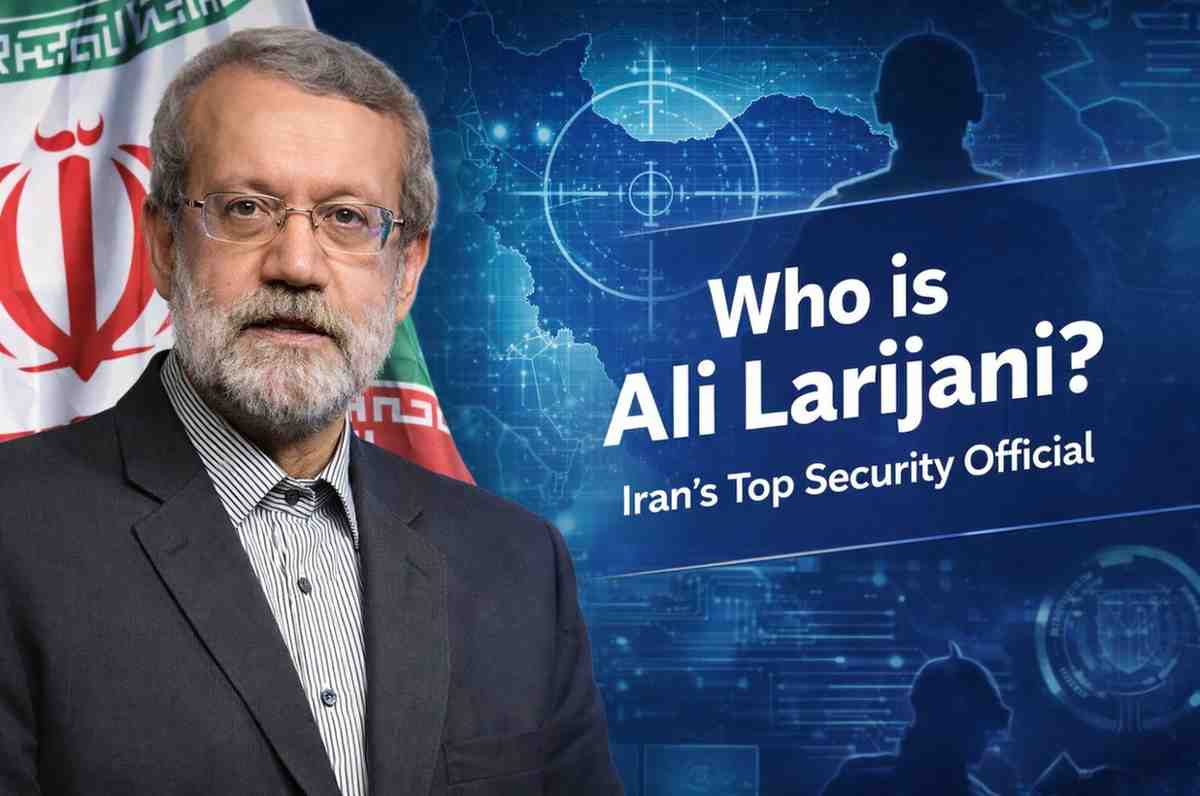
Ali Larijani (3 June 1958 – 16 March 2026) was an Iranian politician, retired military officer, and philosopher who served as Secretary of the Supreme National Security Council from 2025. He previously held the role from 2005 to 2007.
Ali Larijani, Iran’s security commander and head of the Basij militia, resurfaced as one of the most important players in the security hierarchy last year and was purportedly killed in recent Israeli attacks.
Following Ali Khamenei’s death during the 2026 war, Haaretz identified Larijani as the country’s most influential man, while The Australian described him as Iran’s de facto wartime leader.
Following the protests and reports of massacres in Iran, the United States placed fresh sanctions on Larijani on January 15, 2026, for his role in repressing protesters.
According to a report, Larijani was the “mastermind” behind the January 2026 crackdown, using his close ties to IRGC commanders and intelligence services, as well as his family’s longstanding connections to senior clerics, to consolidate support across rival factions and prepare to take over leadership after Khamenei’s death.



In response to the EU’s decision to designate the IRGC as a terrorist organization, Larijani tweeted that any country’s military forces that supported the EU’s move against the IRGC will be labelled terrorist groups and suffer the repercussions of their conduct.
Ali Larijani Biography
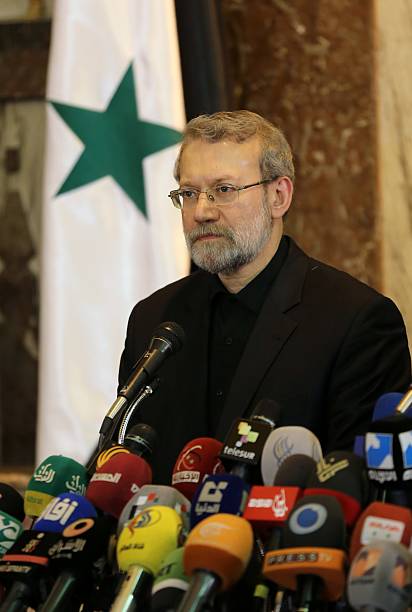
Ali Ardashir Larijani was born in Najaf, Iraq, to Iranian parents. He is from a religious Shia noble family in Amol, Mazandaran Province, northern Iran. His father, Hashim Larijani, was a famous Twelver Shia priest.
His parents went to Najaf in 1931 under coercion from King Reza Shah, but returned to Iran in 1961. Larijani graduated from Qom seminary. He also possesses a Bachelor of Science degree in computer science and mathematics from Aryamehr University of Technology, as well as a master’s and PhD in Western philosophy from the University of Tehran.
He had planned to continue his graduate studies in computer science, but altered his mind after consulting with Morteza Motahhari.
Career
Larijani originally gained public attention as a member of the Islamic Revolutionary Guard Corps (IRGC), which rose to prominence during the Iran-Iraq War as one of the Islamic Republic’s most powerful institutions.
He rose through the ranks of the IRGC, eventually becoming the IRGC’s contact to the Majles. Larijani served as minister of culture and Islamic guidance in President Hashemi Rafsanjani’s cabinet from 1989 to 1997.
He then became the director general of the Islamic Republic of Iran Broadcasting (IRIB), an arm of the Supreme Leader’s Office (Bayt-e Rahbārī) that reports directly to the rahbar.
By the close of the twentieth century, Larijani had established contacts with the upper echelons of the Islamic Republic’s numerous organisations, including the clergy, the IRGC, elected lawmakers, and the rahbar.
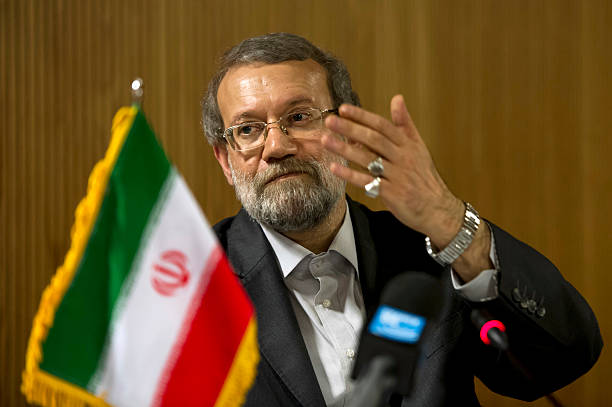
In the early years of Iran’s nuclear problem, Larijani succeeded centrist Hassan Rouhani as SNSC secretary and senior nuclear negotiator. In 2007, President Mahmoud Ahmadinejad (2005-13) replaced him with Saeed Jalili, a hardline foreign policy scholar.
Larijani was elected to the Majles in 2008 and served as speaker until 2020. In that function, he supported Rouhani’s attempts as president to reach an accord with the United States and other foreign powers.
Larijani, a conservative former negotiator who supported Rouhani’s proposal, was credited with bringing the JCPOA to fruition.
Larijani attempted to run for president twice, once in 2021 and again in 2024. In both situations, the Council of Guardians disqualified him.
This was reportedly because his daughter lived in the United States and held British citizenship, but it was also speculated that Khamenei did not want figures from Rouhani’s presidency to run in those elections.
As the Israel-Hamas War had regional ramifications, particularly for Iran and its partner Hezbollah in Lebanon, Khamenei appointed Larijani as an experienced diplomat to help negotiate the crisis.
Following Israel’s 12-day battle with Iran in 2025, Pres. Masoud Pezeshkian appointed Larijani as secretary of the SNSC. In that capacity, Larijani played an important role in the ruthless suppression of Iranian protesters in January 2026.
As the US used the protests to increase pressure on Iran, Larijani emerged as a key figure in Iranian foreign policy, serving as both head of security and veteran of nuclear negotiations.
According to The New York Times, Larijani has effectively been in command of Iran since January 2026 and was “charged with crushing, with lethal force, the recent protests demanding the end of Islamic rule.”
Following the assassination of Ali Khamenei, Larijani declared that the Iranian government will not “leave Trump alone.” In March 2026, Israel Katz reported that the IDF had officially killed Larijani in an air strike.
Ali Larijani Death
An Israeli airstrike targeted Larijani on the night of March 16-17, 2026, during the Iran War. Israeli Defence Minister Israel Katz confirmed Larijani’s death, but the Islamic Republic of Iran has not accepted it.