Robert Baden-Powell Biography: Early Life, Career & Personal Life
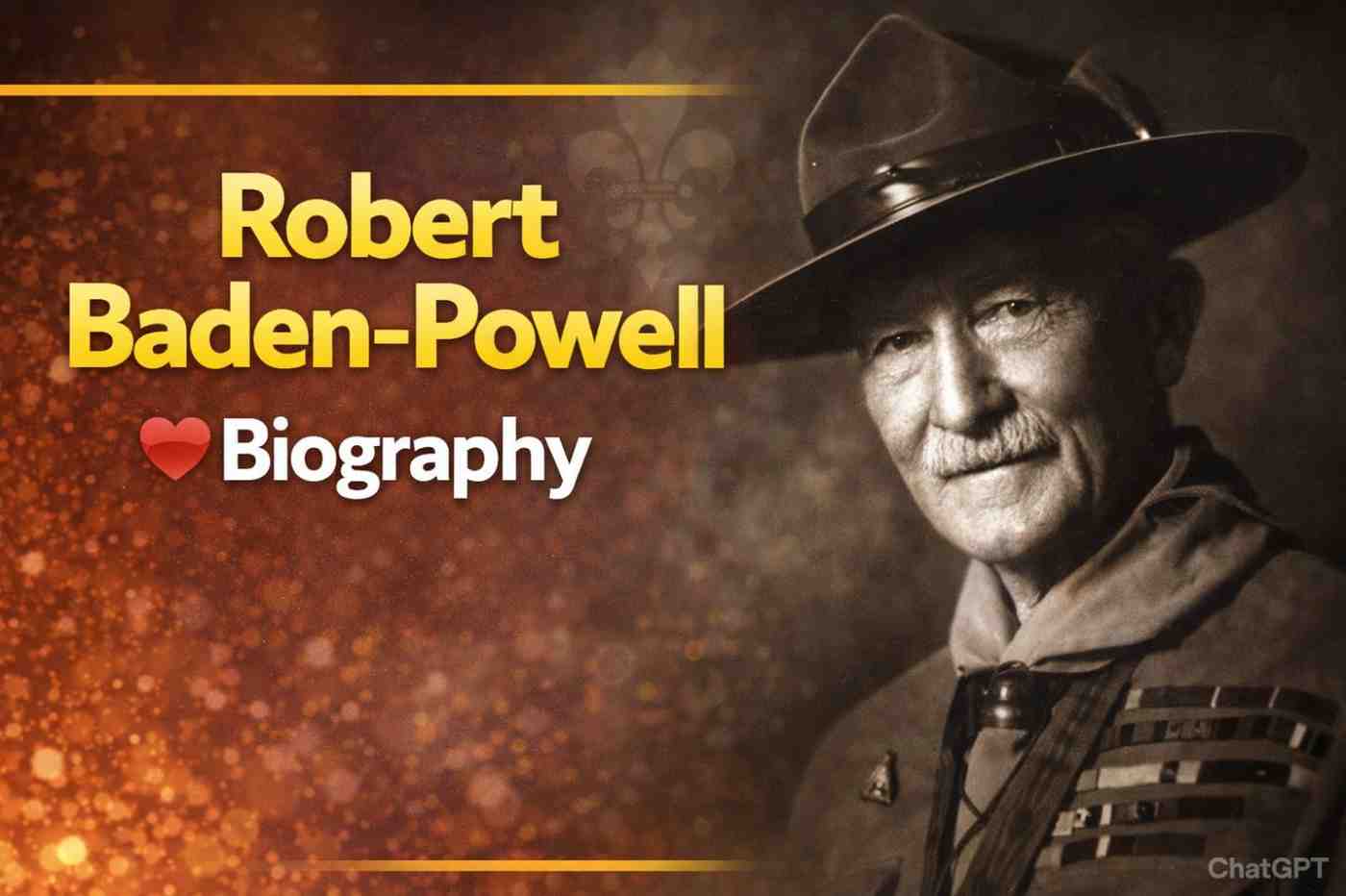
Robert Baden-Powell, 1st Baron Baden-Powell, OM, GCMG, GCVO, KCB, DL (22 February 1857 – 8 January 1941) was a British Army officer, writer, founder of The Boy Scouts Association and its first Chief Scout, as well as The Girl Guides Association, which he cofounded with his sister Agnes.
Baden-Powell wrote Scouting for Boys, which, together with his prior writings, such as Reconnaissance and Scouting (1884) and Aids to Scouting for N.C.Os and Men (1899), which were designed for the military, and The Scout magazine, contributed to the Scout Movement’s rapid expansion.
During the Boer War, Baden-Powell authored “A Guide to Scouting”. This became a best-seller after its publication in 1908. Originally intended for military objectives, after the war he realised it could be used as a focus for young males to give them more significance in life.
This prompted the formation of the Scout Movements. During his lifetime, it evolved to become a reputable international organisation.
Robert Baden-Powell Biography
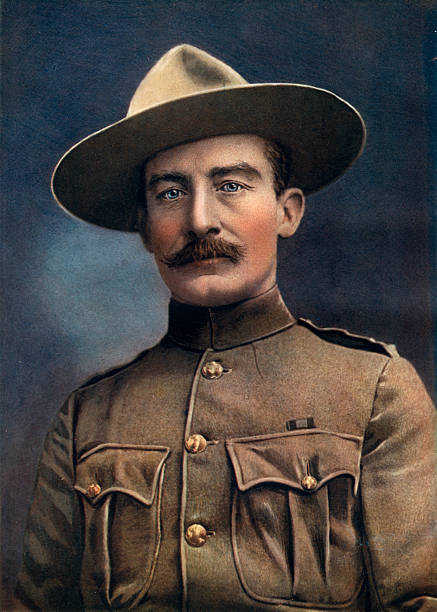
Lieutenant-General Robert Stephenson Smyth Baden-Powell was born in Paddington, London, on February 22, 1857. His father, a Church of England priest, taught at Oxford University. Baden-Powell’s father passed away when he was three years old, leaving his mother, Henrietta Grace Smyth, to raise him and his siblings. He attended Charterhouse School and mastered basic scouting skills while playing in the surrounding forests.



Career
Following graduation, he joined the British Army as an officer and was stationed in India. He served in the British army from 1876 to 1910.
During his service career, he learned more advanced scouting techniques, particularly in South Africa, where knowledge of the landscape was essential for gathering information and evading the enemy.
In 1884-85, Baden-Powell rose to prominence for his employment of observation balloons in warfare in Bechuanaland (now Botswana) and Sudan. From October 12, 1899, to May 17, 1900, he defended Mafeking, repelling a far bigger Boer force until the siege was lifted.
Following the war, he recruited and trained the South African constabulary. After returning to England in 1903, he was named inspector general of cavalry, and the following year he founded the Cavalry School in Netheravon, Wiltshire. He was appointed lieutenant general in 1907.
Baden-Powell conducted a trial camp on Brownsea Island, off Poole, Dorset, in 1907, after learning that his military manual Aids to Scouting (1899) was being used to instruct boys in woodcraft. He also drafted an outline for the intended Boy Scout movement.
Scout troops sprouted up all over Britain, and Baden-Powell’s Scouting for Boys was published in 1908 to guide them. He withdrew from the army in 1910 to dedicate all of his attention to the Boy Scouts, and the same year, he and his sister Agnes Baden-Powell (1858-1945) formed the Girl Guides.
His wife, Olave, Lady Baden-Powell (1889-1977), also helped to promote the Girl Guides. In 1916, he founded the Wolf Cubs in Great Britain (now Cub Scouts in the United States) for boys under the age of eleven. At the inaugural worldwide Boy Scout Jamboree (London, 1920), he was named world chief scout.
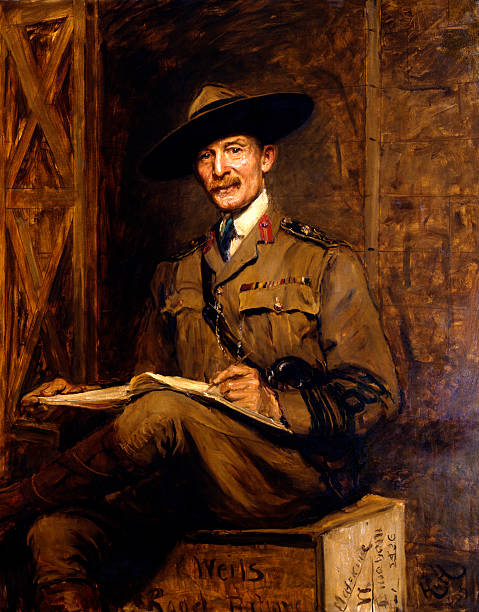
Baden-Powell, who had been a baronet since 1922, was elevated to baron status in 1929. He spent his final years in Kenya for his health. His autobiography, Lessons of a Lifetime (1933), was followed by Ernest Edwin Reynolds’ Baden-Powell (1942, 2nd ed. 1957) and Tim Jeal’s The Boy-Man: The Life of Lord Baden-Powell (1989).
Boy Scouts is an organization for boys aged 11 to 14 or 15 years old that aims to instill in them excellent citizenship, chivalrous manners, and ability in a variety of outdoor sports. Lieutenant General Robert S.S. (later Lord) Baden-Powell, a cavalry officer who had authored a book called Scouting for Boys (1908), started the Boy Scout movement in Great Britain in 1908.
He was better renowned for defending the town of Mafeking during the South African (or Boer) War. Baden-Powell’s book documented many of the games and contests he employed to instruct cavalry troopers in scouting, and it became a popular read among British lads.
Before the publishing of the book, Baden-Powell held an experimental camp on Brownsea Island, off the coast of southern England, where he tested his ideas about boy training. Baden-Powell proposed that boys organise themselves into tiny natural subgroups of six or seven under a boy leader—the patrol and patrol leader.
Their training would include tracking and reconnaissance, mapping, signalling, knotting, first aid, and all of the abilities learned while camping and participating in other outdoor sports. To become a scout, a youngster must agree to be loyal to his nation, serve others, and generally follow the scout law, which is a simple code of chivalrous behaviour that the boy may easily understand.
The underlying pattern of scouting goals and emphases has persisted. Scouting in every country includes a scout oath or promise; a scout law, with minor variations as national traditions and culture require; an emphasis on the joys of outdoor life and the pursuit of outdoor activities such as camping, swimming, sailing, climbing, canoeing, and cave exploration; progressive training rewarded by the granting of specific badges; and the encouragement of a daily good deed.
Every country awards a specific badge for the highest level of competency. The scouts’ insignia include the handshake with the left hand, the fleur-de-lis badge, and the slogan “Be prepared.”
Baden-Powell had intended for his ideas to be implemented by existing youth organisations in Britain, but it was soon clear that a new movement had emerged, and the Boy Scouts quickly spread to other nations. In 1910, there were Boy Scout groups in Sweden, Mexico, Argentina, and the United States, as well as Commonwealth countries including Canada, Australia, and South Africa.
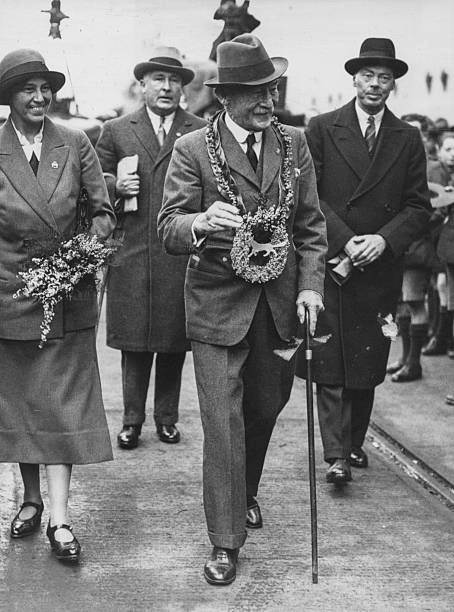
By the early twenty-first century, around 170 countries had national Boy Scout organisations. The World Organization of the Scout Movement, founded in 1920 and headquartered in Geneva, promotes scouting around the world. It has regional offices in Belgium, Egypt, the Philippines, Kenya, Senegal, South Africa, Chile, and the Ukraine.
Boy Scout units, also known as troops, are organised into individual subgroups, or patrols, which meet regularly. Scout troops are supported locally by churches, schools, fraternal organisations, and other community groups. Each troop is led by an adult “scoutmaster”. The American organization has attempted to accommodate boys from various backgrounds, while the courts have upheld its authority as a private organization to set rules that exclude some groups from membership or leadership.
Since 1920, worldwide scout meetings, often known as “world jamborees,” have been conducted every four years. Jamborees are gatherings of thousands of scouts representing their respective countries, who camp together in goodwill. There have also been numerous national camps visited by groups of scouts from adjacent nations.
The Boy Scout movement was designed for boys aged 11 to 14 or 15 years old, but it quickly became clear that programs for younger and older boys were necessary. As a result, in 1916, Baden-Powell established the Wolf Cubs, a rival organization for younger boys (known in some countries as Cub Scouts). Programs have been designed for even younger boys (Beaver Scouts in the United Kingdom for ages 6 to 8, Tiger Cubs in the United States for ages 7).
Varsity programs in the United States are open to boys aged 14 to 17 years old, while Venturing is open to young men and women aged 14 to 20.
The word “Boy” was removed from the British organization’s name in 1967, and girls were allowed to join at the Cub level and above in 1980. The Boy Scouts of America (BSA) received significant criticism in the late twentieth century for banning homosexual troop leaders. James Dale, an openly gay assistant scoutmaster who was expelled in 1999, filed a lawsuit against the organization.
The Boy Scouts of America v. Dale case eventually reached the United States Supreme Court, which found in favour of the BSA in 2000. However, the debate persisted, and some corporate sponsors withdrew their support for the BSA. In 2014, Robert M. Gates, the former US Secretary of Defence who oversaw the repeal of Don’t Ask, Don’t Tell, was named president of the group.
He later pushed to repeal the restriction, which was lifted in July 2015, with exceptions given for church-sponsored troops. In 2017, the BSA stated that it would welcome younger girls to its Cub Scout organization beginning in 2018 and would launch a program for older females to obtain the Eagle Scout title in 2019.
In 2018, the BSA announced that its Boy Scouts program would be renamed Scouts BSA and would accept both boys and girls beginning in 2019. The BSA declared bankruptcy in 2020, after facing multiple lawsuits over allegations of child sexual abuse by certain Scout leaders.
Baden-Powell Death
After retiring in 1938, he came to Africa and stayed in Nyeri, Kenya. He died on January 8, 1941, at the age of 83. He was buried at Nyeri, in view of Mount Kenya. The words “Robert Baden-Powell, Chief Scout of the World” are engraved on his monument, which is topped by the Boy Scout and Girl Guide badges.
Baden-Powell Wife
Baden-Powell met Olave St Clair Soames on the ocean liner SS Arcadian while on his way to New York for a globe speaking tour in January 1912. She was 23 and he was 55; they both had the same birthday, 22 February.
They became engaged in September of the same year, sparking a media frenzy due to Baden-Powell’s celebrity. To avoid press interference, they married discreetly on October 30, 1912, at St Peter’s Church in Parkstone.
Approximately 100,000 Scouts paid a penny (1d) each to buy Baden-Powell a wedding gift: a 20-horsepower Standard Motor Company car (rather than the Rolls-Royce they received in 1929).
Baden-Powell and his wife had three children: Arthur Robert Peter (known as Peter) (1913-1962), Heather Grace (1915-1986), who moved to Alton in 1940, and Betty St Clair (1917-2004).