Naira to Dollar rate today, Thursday, March 19, 2026
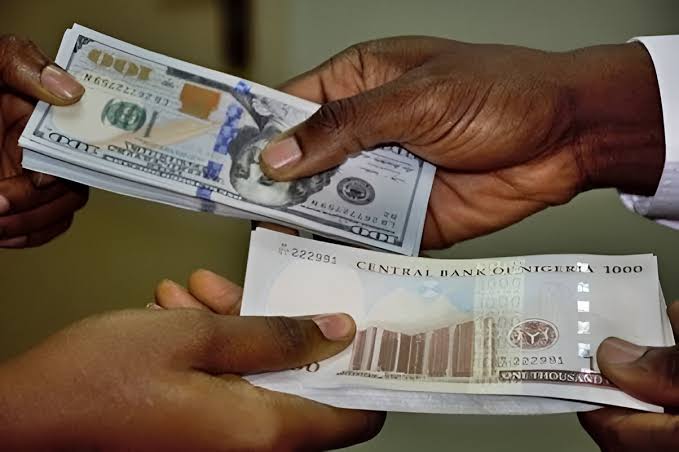
The Nigerian Naira held steady against the US Dollar on Thursday, March 19, 2026, trading at an average rate of N1,357.11/$1 in the official market, as rising global oil prices and strong external reserves continue to support the currency.
The foreign exchange market reflected relative calm during early trading, with the local currency showing only slight movement compared to Wednesday’s close.
Market activity remained strong, backed by recent interventions from the Central Bank of Nigeria (CBN).
Official Market Holds Firm
At the Nigerian Foreign Exchange Market (NFEM), the Naira demonstrated resilience, maintaining stability despite global economic pressures.
The steady performance comes as Nigeria’s external reserves climbed to a 13-year high of $50.03 billion.




CBN Governor, Olayemi Cardoso, recently stated that the increased reserves provide enough strength to manage market volatility.
This comes at a time when geopolitical tensions in the Middle East have pushed Brent crude oil prices above $100 per barrel.
Parallel Market Activity
In the parallel market, also known as the black market, the Naira remained relatively stable across major trading centres.
Bureau De Change operators in key locations such as Ikeja and Lagos Island quoted the dollar at N1,410 for buying and N1,415 for selling. Similar rates were observed in Abuja’s Wuse Zone 4.
Despite improvements since the 2025 forex reforms, a gap still exists between official and parallel market rates.
Analysts estimate the difference at about N53 to N58, driven largely by demand from small importers and individuals paying for foreign services like school fees and travel.
Outlook Remains Cautious
While the current stability is encouraging, the CBN has warned about the risk of “imported inflation.”
The bank noted that higher global oil prices, though beneficial for revenue, could raise energy and transportation costs.
This could place pressure on Nigeria’s inflation rate, which recently eased to 15.06%.
Financial analysts believe the Naira is currently in a consolidation phase. They also point to the increasing output of the Dangote Refinery, now operating at about 700,000 barrels per day, as a key factor.
The refinery’s higher capacity is expected to reduce the country’s dependence on fuel imports, easing demand for foreign exchange and potentially strengthening the Naira further by the second quarter of 2026.