“I’ve never in my life addressed Tinubu as a drug lord” — Daniel Bwala denies past comments
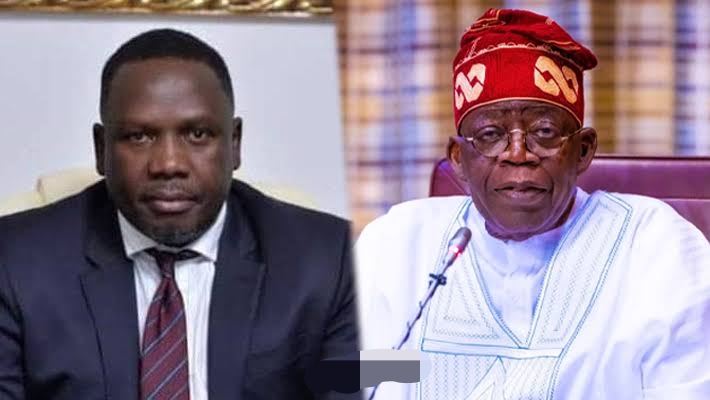
Fresh controversy has trailed comments made by Daniel Bwala, the Special Adviser to President Bola Ahmed Tinubu on Media and Public Communications, during a heated interview with News Central Television, where he firmly denied ever calling the President a “drug lord” and dismissed viral claims attributed to him as misrepresentation.
During the interview, Bwala pushed back strongly against the interviewer’s line of questioning, insisting his past statements were taken out of context.
Bwala said: “I have never in my life addressed Asiwaju Bola Ahmed Tinubu as a drug lord. In fact, I have never believed in it.”
The interviewer, however, challenged him, suggesting that video evidence could exist contradicting his claim.
Interviewer: “So if we bring out a video today now, you’ll say we doctored?”



Bwala responded sharply: “No, no, no, no. In fact, if you bring….”
Interviewer pressed further: “If we find that video…”
Bwala countered: “If you have it here, we can short the interview and you produce it. There is a second one, again, you will see it on social media where they said, Bwala said, even if you give Asiwaju Bola Ahmed Tinubu 30 years, that nothing will happen. Again, it is the laziness associated with media in Nigeria.”
He insisted the widely circulated quote was misrepresented and originally referred to policy criticism rather than a personal attack.
“It was misquoted. And I have the video now. It’s a few seconds. Can I play it?”
Interviewer declined: “No, no, it’s…”
Bwala continued, clarifying the context of his earlier remarks: “So in that interview, it was on the 25th of December, December 2023, where I was critiquing the policy of the government.”
The interviewer interjected again: “This was an interview on Arise.”
Bwala corrected: “No, it was on Channels. Where I was critiquing the policy. And then I said, where a policy is fundamentally flawed, that 30 years will not correct it. But, you know, Obidient, very good. They are experts in social media.”
He accused social media users of twisting narratives, claiming the altered version of his statement gained wider circulation than the original.
“They now say, even if you give Tinubu 30 years, and that thing has moved, has lingered. It has been quoted and recorded by…Newspapers. Newspapers had it all over. I didn’t get to watch the interview. Let me tell you why.”
The interviewer responded, noting that mainstream media had also reported the controversial phrase and questioning his later political alignment with the President.
Interviewer: “But newspapers had it everywhere that you said, even if you give Asiwaju 30 years. And I’m sure that was one of the interviews that you had afterwards on a number of TV stations to clarify that particular issue. Indicating that you said, if you give him 30 years, and yet you came to work for him.”
Bwala maintained his defence, stressing the importance of context in interpretation.
“And in my answer, I said, I was critiquing the policy. And I said, if a policy is fundamentally flawed, 30 years will not correct it.”
He also used the opportunity to criticise what he described as poor verification practices in Nigerian journalism, warning about the influence of social media on mainstream reporting.
“Now, when you mentioned it was reported in the paper, that is the second question that the Nigerian media should begin to look at. How social media now set the tone and agenda for mainstream media.”
According to him, misinformation spreads quickly when media houses fail to properly verify claims before publication.
“And this is where we have the problem in Nigeria today. Believe me, I’m telling you. I see some television houses, not all of them, where they report stories on social media that were unverified, as though it is a verified some information and people run to town with it.”
He further emphasised the importance of proper research and source verification in journalism and academic work.
“This is the danger of lack. And what I said in that one, it was very easy to verify before somebody fly with it. If, for example, assuming you’re running a newspaper and you see on social media that I say something like that, wouldn’t for the purposes of verifying your information, which is part of the ethics, we need to say, let me go to the source.”
He added: “Now, as a researcher, I will tell you the discipline in research. It is not enough that you are citing a reference or that you come across a reference. It’s important you go to the source of the book that was referenced.”
According to him, proper verification helps ensure accuracy and credibility.
“So you can get the context of the author and where necessary to also stretch it further and see peer review what was the opinion of others regarding that point that was highlighted so that when you say something, it will be cast in stone.”
Bwala concluded by acknowledging the changing nature of journalism and the dominance of social media-driven narratives.
“But I can understand that journalism now has taken a different dimension, that very good journalists, their good work is being overshadowed by the conduct of very few minority who have mastered the nuances of social media that feeds off of vitriol and hate for the purposes of monetization or revenue.”
Watch the video here…
“I have never in my life addressed Asiwaju Bola Ahmed Tinubu as a dr¥g lord” — Lawyer Daniel Bwala pic.twitter.com/F6kJCFyzzI
— Instablog9ja (@instablog9ja) April 6, 2026