“Insecurity is an industry in Nigeria; it has lasted for 15 years” – Ex-President Obasanjo
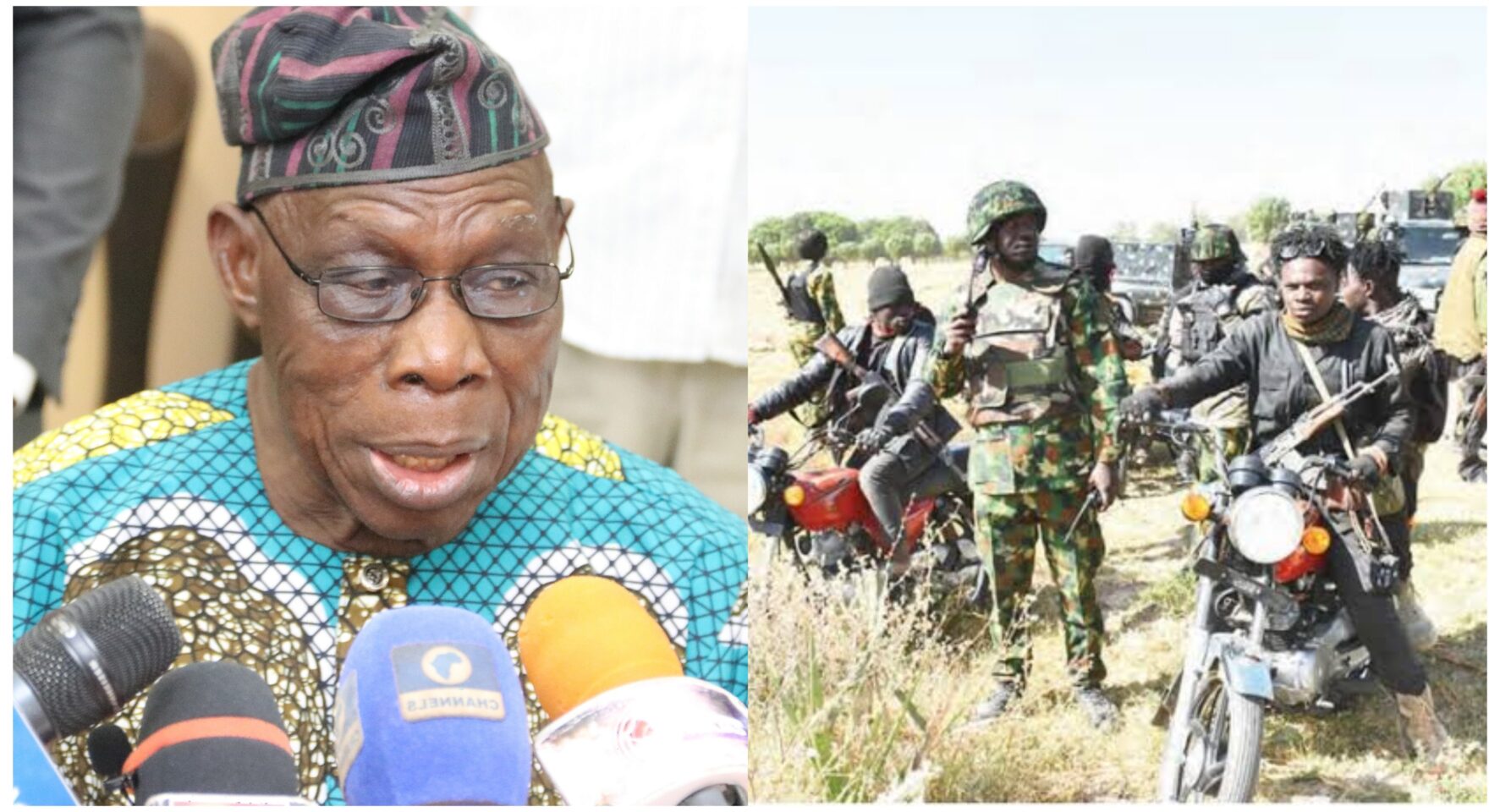
Former President Olusegun Obasanjo has faulted Nigeria’s prolonged security troubles, saying the fight against Boko Haram and insurgency has lasted so long that it now appears like “an industry” benefiting several actors within and outside government.
He made the remarks on Sunday during the live-streamed Toyin Falola Interviews, where he criticised the country’s slow progress in ending a crisis that has outlived the 30-month civil war despite huge defence spending.
Obasanjo Questions Nigeria’s Counterinsurgency Strategy
The discussion also featured Bishop Matthew Kukah of the Sokoto Diocese and former CBN Deputy Governor Kingsley Moghalu, who joined him to examine Nigeria’s escalating insecurity.
Obasanjo argued that national leaders have repeatedly failed to deploy the right mix of modern counterinsurgency tools.
He said Nigeria still relies heavily on conventional military methods, which cannot defeat a scattered terror network embedded in civilian communities.



“The military is trained for conventional war. If the people you are dealing with are fleeing targets or living among your people, you will need different types of training,” he said.
He praised Colombia’s counterinsurgency experience and suggested Nigeria may need to learn from their model.
“Among the countries that have done that fairly successfully is Colombia. Should we invite them? There is no shame in that.”
“The Whole Thing Is an Industry”
The former president, who quelled Niger Delta militancy during his tenure, hinted at internal sabotage and collusion within Nigeria’s security system.
“The whole thing is an industry. It is an industry,” he declared, while criticising the practice of allowing military officers to buy their own equipment.
He stressed the need for training, intelligence, technology, and specialised equipment to work together, warning that Nigeria cannot win the war if foreign partners distrust Lagos and Abuja because of information leakages or compromised officers.
Missed Ceasefire Opportunity
Obasanjo also recalled his 2011 backchannel efforts with Boko Haram, saying the group initially refused discussions but later accepted a 21-day ceasefire.
“They agreed to 21 days of ceasefire to negotiate. Government failed to reach out,” he noted.
Despite trillions of naira spent since 2009, insurgent attacks, mass abductions, and banditry still trouble many communities across the North-East and North-West.