How Tinubu helped stop coup in Benin Republic – Reno Omokri
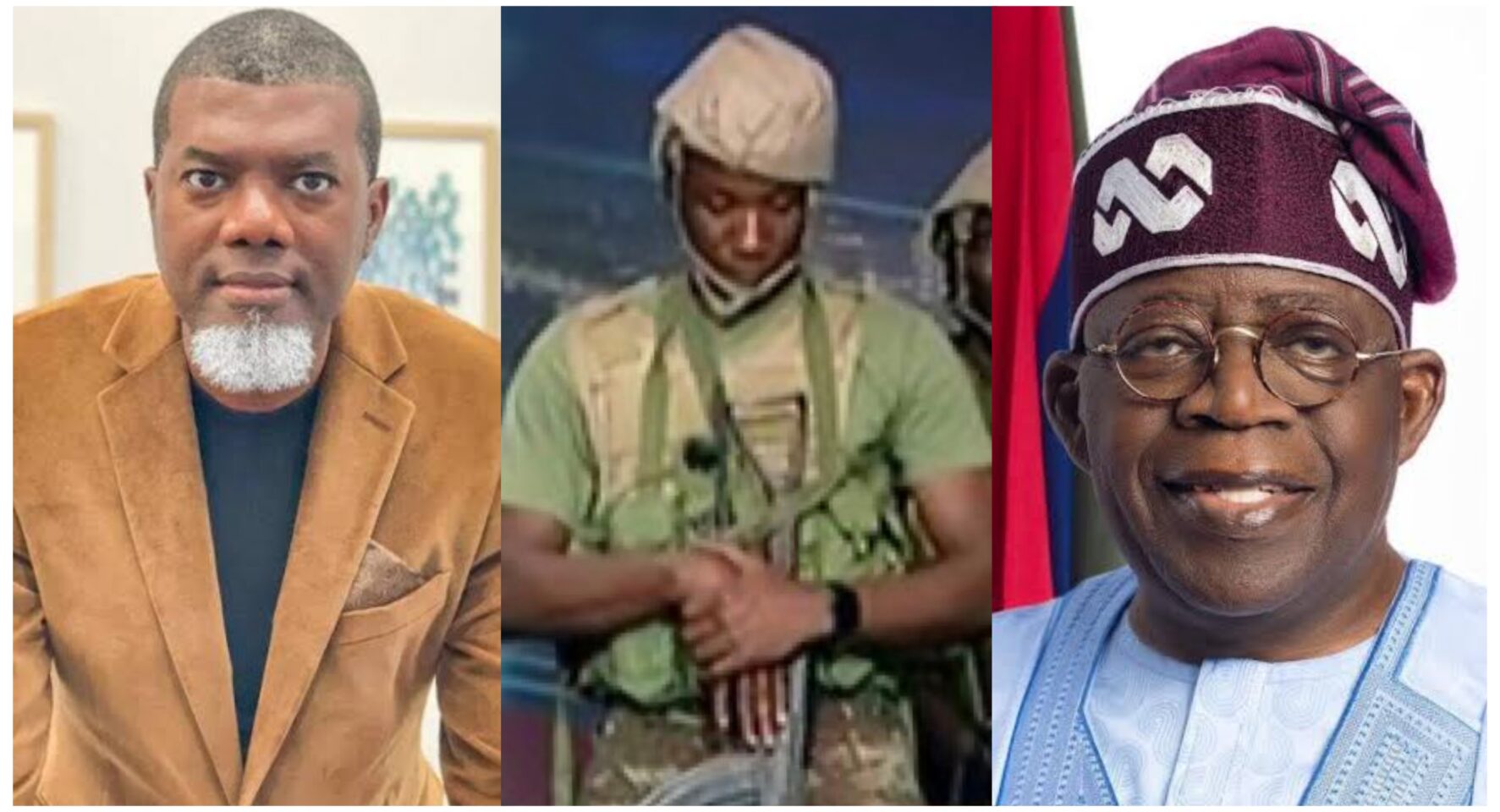
Reno Omokri, a well-known critic-turned-supporter of President Bola Tinubu, has applauded the Nigerian leader for what he described as Nigeria’s renewed leadership role in West Africa.
In a detailed post shared on X (formerly Twitter), Omokri claimed that Nigerian troops and aircraft played a key role in stopping an attempted coup in the Republic of Benin over the weekend.
He described the incident as “a proud moment for Nigeria” and a demonstration of Tinubu’s growing influence in the region.
Omokri Highlights Nigeria’s Past Regional Interventions
According to Omokri, Nigeria’s involvement in the failed Benin coup is not an isolated event but the third time the country has intervened to protect a legitimate government in Africa.
He recalled that in 1964, during a mutiny in Tanganyika—now Tanzania—the administration of Prime Minister Tafawa Balewa deployed the Nigerian Army’s 3rd Battalion to restore order.

Led by Lt. Colonel James Yakubu Pam, the troops helped stabilise the country and paved the way for the union of Tanganyika and Zanzibar, forming modern-day Tanzania.
Nigeria’s Role in São Tomé and Príncipe
Omokri also referenced Nigeria’s involvement in resolving the 2003 coup in São Tomé and Príncipe.
He noted that former President Olusegun Obasanjo adopted a “carrot-and-stick” approach, including deploying Nigerian Air Force jets for a show of force.
Within a week, coup leader Major Fernando Pereira stepped down, allowing the reinstated President Fradique de Menezes to return to power.
Benin Coup Attempt: Nigeria’s Latest Intervention
Omokri described the events in Benin Republic as one of Nigeria’s most impactful democratic interventions.
He said the Nigerian government swiftly established communication with Benin’s elected authorities and, upon receiving approval, deployed air and ground forces to counter the coup attempt linked to Lt. Col Pascal Tigri.
He added that the presence of Nigerian fighter jets in Cotonou boosted public confidence while discouraging the coup plotters, who were eventually subdued.
“Nigeria Is Back,” Omokri Says
Omokri argued that Nigeria’s foreign policy under President Tinubu signals a broader resurgence of the nation’s global standing.
He highlighted improvements in oil production, reduced oil theft, and the country’s shift from being a major petrol importer to an emerging regional fuel exporter.
According to him, Nigeria has exceeded its OPEC quota for four consecutive months, producing an average of 1.71 million barrels of crude oil per day—a development he described as unprecedented in over a decade.
Omokri concluded by declaring that Nigeria, under Tinubu’s leadership, is re-establishing itself as a strong economic and geopolitical force, adding that “Nigeria’s glory days are here again.”
Read Reno Omokri’s full text here:
Restoration of Democracy in Benin: Under Tinubu, Nigeria’s Glory Days Are Here Again!
It is no longer news that Nigerian troops and our Air Force helped foil the attempted coup that occurred in the Republic of Benin over the weekend.
That was and is a proud moment for Nigeria, cementing our role under President Tinubu as the regional superpower and a stabilising force for democracy in Africa.
What a great day to be a Nigerian!
However, what many people do not know is that this is now the third time that the Nigerian military has been deployed to brother African nations to foil coups.
In 1964, Tanganyika, the original name of Tanzania, was facing a serious mutiny. Their army, then known as the Tanganyika Rifles, faced widespread reactions to John Okello’s revolution in Zanzibar, culminating in mutinies against the elected government of Mwalimu Julius Nyerere, who went into hiding.
A desperate President Nyerere reached out to the Tafawa Balewa administration.
Prime Minister Balewa then sent the 3rd Battalion of the Nigerian Army, under Lt. Colonel James Yakubu Pam, to Tanzania, where they arrived sometime in April 1964. This prompted President Nyerere to come out of hiding and assert himself.
Under Lt. Colonel Pam’s leadership, the country was secured, mutineers who evaded arrest were traced and apprehended, and the Tanganyika Army, known as the Tanganyika Rifles, was disbanded.
The Nigerian forces, under Lt. Colonel Pam, provided the military muscle that led to the union of Tanganyika and Zanzibar and the creation of the new country of Tanzania on Sunday, April 26, 1964.
The second time that Nigeria intervened to restore a democratically elected government after a military coup was in 2003 in São Tomé and Príncipe.
When Major Fernando Pereira overthrew the government of President Fradique de Menezes of São Tomé and Príncipe in a coup d’état in 2003, then President Obasanjo did not sit down and fold his hands or twiddle his thumbs. He did not release statements. He took action. Decisive action.
President Obasanjo used a carrot-and-stick approach. He called the coup leaders and threatened them. He followed up his threats by having Nigerian Air Force jets fly over the São Tomé and Príncipe Presidential Palace in a show of force.
Like magic, after a week, Major Fernando Pereira vacated power.
President Obasanjo would later fly to Libreville to pick up President de Menezes and return him to his capital, São Tomé.
But perhaps Nigeria’s most remarkable feat in protecting democracy in Africa is what it did in the Republic of Benin this weekend.
As a nation in good standing in the international community, we did not shirk our responsibility as a regional leader. Our government quickly and effectively established contact with the legitimately elected government of that nation, and upon their request and approval, we deployed air and ground forces to nip the so-called television coup plot led by Lt. Col Pascal Tigri in the bud.
When Beninese citizens in the capital, Cotonou, heard Nigerian fighter jets flying over their airspace, they felt safe. But the putschists did not. They tried to flee, but the gallantry of Nigeria’s loyal military overwhelmed their attempts to act valiantly.
And by that decisive action of the magnificent men and women of our armed forces, law and order, as well as stability, were restored in Benin.
Not only is Nigeria, under President Tinubu, back as an economic power, and within two years moving from being Africa’s biggest petrol importer to becoming West Africa’s largest exporter of the same product, but we are also back as an emerging world medium power.
Under Tinubu, you, as a Nigerian, can be proud that, for the first time in over a decade, Nigeria has exceeded its OPEC quota for four consecutive months and is set to do so for the fifth month, producing an average of 1.71 million barrels per day. Oil theft has been reduced to less than 10,000 barrels per day, a sixteen-year low.