‘Actor’ Chuck Connors Biography: Early Life, Career, Movies, Death, Family & Net Worth
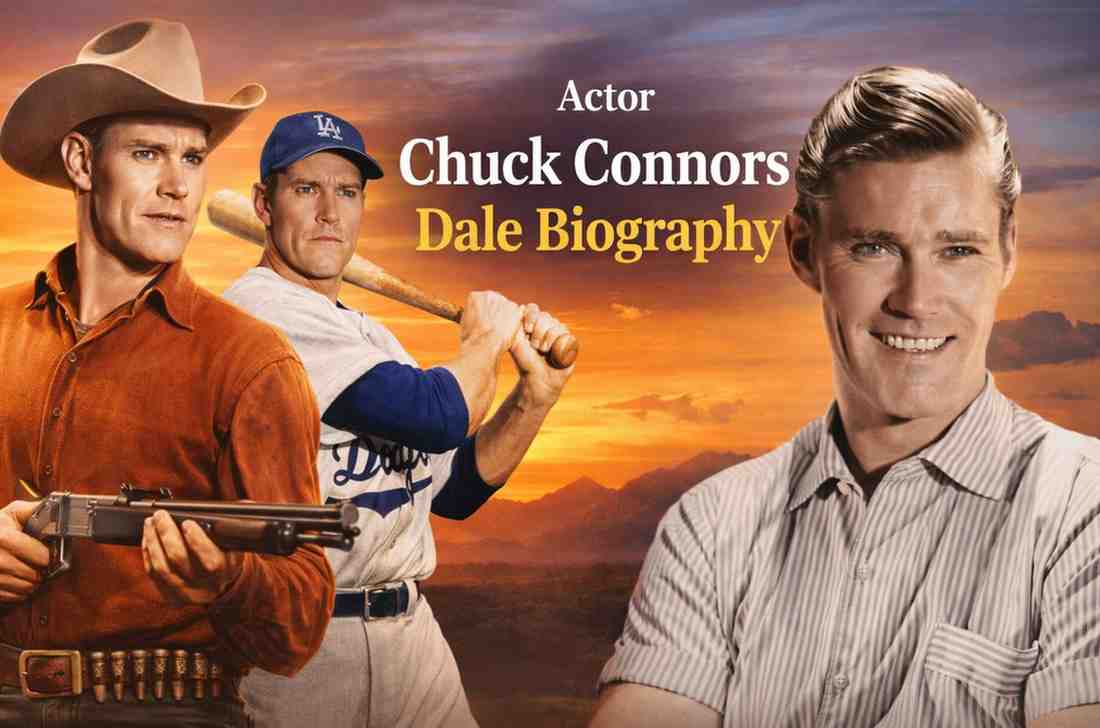
Chuck Connors (April 10, 1921 – November 10, 1992) was an American actor who also played professional basketball and baseball. He is one of just 13 players in American professional sports history to have competed in both the National Basketball Association (Boston Celtics, 1946-1948) and Major League Baseball (Brooklyn Dodgers, 1949; Chicago Cubs, 1951).
With a 40-year career in film and television, he is best remembered for his portrayal of Lucas McCain on the ABC series The Rifleman (1958-1963).
Actor Chuck Connors Biography
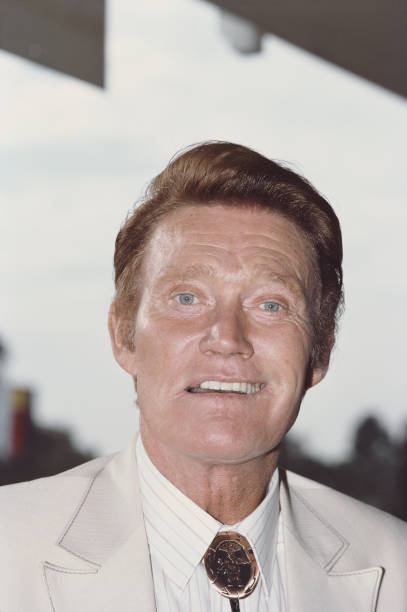
Kevin Joseph “Chuck” Connors was born on April 10, 1921, in Brooklyn, New York City, to Marcella (1894-1971) and Alban Francis “Allan” Connors (1891-1966), who were Irish immigrants from Newfoundland and Labrador.
He only had one sibling, a younger sister named Gloria Marie Connors Cole (1923-2020). Connor was raised as a Catholic and served as an altar boy at the Basilica of Our Lady of Perpetual Help in Brooklyn. His father became a citizen of the United States in 1914 and was working as a docker in Brooklyn in 1930, while his mother also obtained US citizenship in 1917.
Connors was an ardent follower of the Brooklyn Dodgers, despite their losing record in the 1930s, and intended to join the team someday. He was a great athlete who received a scholarship to Adelphi Academy, a preparatory school in Brooklyn, from which he graduated in 1939.


He was offered athletic scholarships by almost two dozen schools and universities. He attended Seton Hall University, where he played basketball and baseball.
After two years, Connors departed Seton Hall to take a professional baseball contract. He played for two minor league teams in 1940 and 1942 before joining the United States Army after America entered World War II.
Throughout the war, he worked as a tank-warfare instructor at Fort Campbell, Kentucky, and later at West Point in New York.
Career
Connors played four baseball games with the Brooklyn Dodgers’ minor league team, the Newport Dodgers (Northeast Arkansas League), after leaving college in 1940. After being released, he waited out the 1941 season before signing with the New York Yankees’ farm team, the Norfolk Tars (Piedmont League), where he played 72 games until joining the Army at Fort Knox, Kentucky, at the end of the season on October 10, 1942.
Following his service in the Army, Connors played for the Newport News Dodgers (Piedmont League) in 1946, the Mobile Bears (Southern Association) in 1947, the Montreal Royals (International League) from 1948 to 1950, and the Los Angeles Angels (Pacific Coast League) in 1951 and 1952.
Connors is one of 13 athletes who have competed in both the NBA and Major League Baseball. The other 12 are Danny Ainge, Frank Baumholtz, Hank Biasatti, Gene Conley, Dave DeBusschere, Dick Groat, Steve Hamilton, Mark Hendrickson, Cotton Nash, Ron Reed, Dick Ricketts, and Howie Schultz.
In 1948, Connors attended spring training with the Brooklyn Dodgers of Major League Baseball but did not make the team. He spent two seasons with the Dodgers’ AAA team, the Montreal Royals, before playing one game with the Dodgers in 1949.
After two more seasons in Montreal, Connors joined the Chicago Cubs in 1951, appearing in 66 games as a first baseman and occasional pinch hitter. In 1952, he returned to the minor levels to play for the Cubs’ best farm team, the Los Angeles Angels.
Chuck left Boston to play baseball for the Brooklyn Dodgers, but after only one major league game and two seasons in the minors, he departed the Dodgers to join the Chicago Cubs. His playing time rose, but after just one season, he was sent back to the minor leagues, this time to play for the Los Angeles Angels.
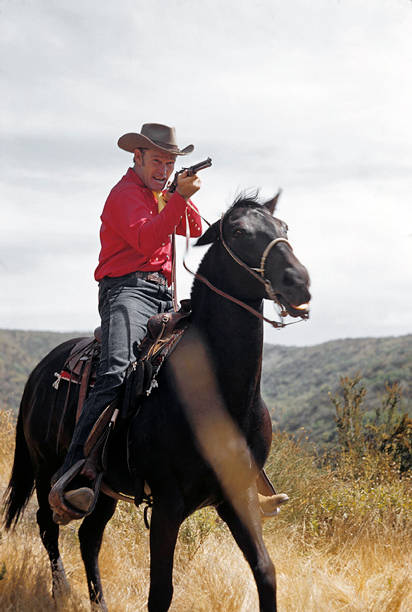
This proved to be a watershed moment in his life; when playing for the Los Angeles Angels, he was seen by an MGM casting director, and in 1952 he became a full-time actor, putting his athletic career behind him.
Chuck was cast as a Police Captain in the film “Pat and Mike” in 1952; even though it was only a minor role, Chuck was encouraged to pursue other roles; he continued with minor roles, appearing in films such as “Hold Back the Night,” “Death in Small Doses,” and “The Hired Gun,” among others.
He rose to stardom in the late 1950s with the character of Lucas McCain in the highly renowned TV series “The Rifleman” (1958-1963), co-starring with Johnny Crawford in a series that glorified both of them; the two were close friends until Chuck died.
After the series ended in 1963, he continued his career with the lead role in the adventure film “Flipper” (1963), then as Jason McCord in the TV series “Branded” (1965-1966), and finally as the lead in the adventure film “Captain Nemo and the Underwater City” in 1969.
Chuck rose to prominence during the next two decades, appearing in films such as “Soylent Green” in 1973, “Tourist Trap” (1979), and “Summer Camp Nightmare” (1987), all of which enhanced his net worth.
Chuck starred in many additional films before he died in 1992, including “The Gambler Returns: The Luck of the Draw” in 1991, starring Kenny Rogers, Rick Rossovich, and Reba McEntire, as well as the action picture “Three Days to Kill” in 1992, his final appearance.
Filmography
- Pat and Mike
- Trouble Along the Way
- Code Two
- South Sea Woman
- Dragonfly Squadron
- The Human Jungle
- Last Flight to Hell
- Face the Edge Buddy
- Salmonberries
- Three Days to a Kill
- A Man Who Fell from the Sky
Chuck Connors Spouse & Family
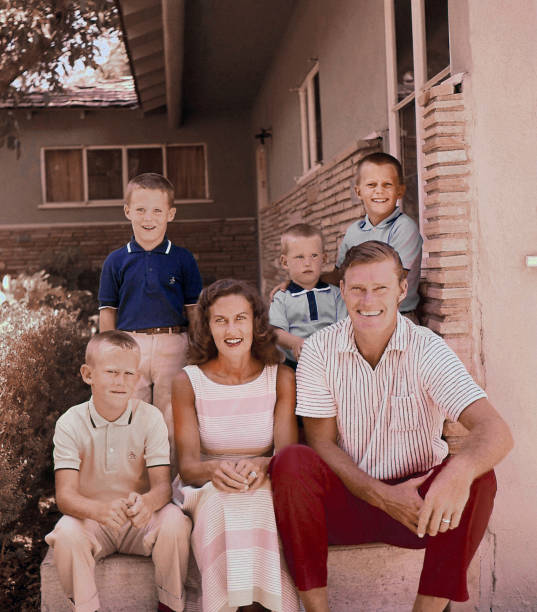
Chuck married and divorced three times. His first wife, Elizabeth Jane Riddell, was with him from 1948 to the early 1960s, and the couple had four children together.
In 1963, he married Indian actress Kamala Devi, and they were married until 1972. Five years later, he married actress Faith Quabius, but the marriage lasted barely three years. Chuck was in a relationship with Rose Mary Grumley when he died.
Death
Connors died from lung cancer on November 10, 1992, at Cedars-Sinai Medical Center in Los Angeles. He is interred in San Fernando Mission Cemetery.
Chuck Connors Net Worth
With over 130 gigs, Chuck has amassed quite a fortune; let’s see how much. According to sources, Chuck’s net worth is around $5 million.
Some of the most profitable films in which he appeared included “Move Over, Darling” (1963) and “Old Yeller” (1957), which greatly increased his personal worth.ver, Darling” (1963) and “Old Yeller” (1957), which greatly increased his personal worth.