“Acting President of Venezuela” – Trump’s controversial post sparks online reactions
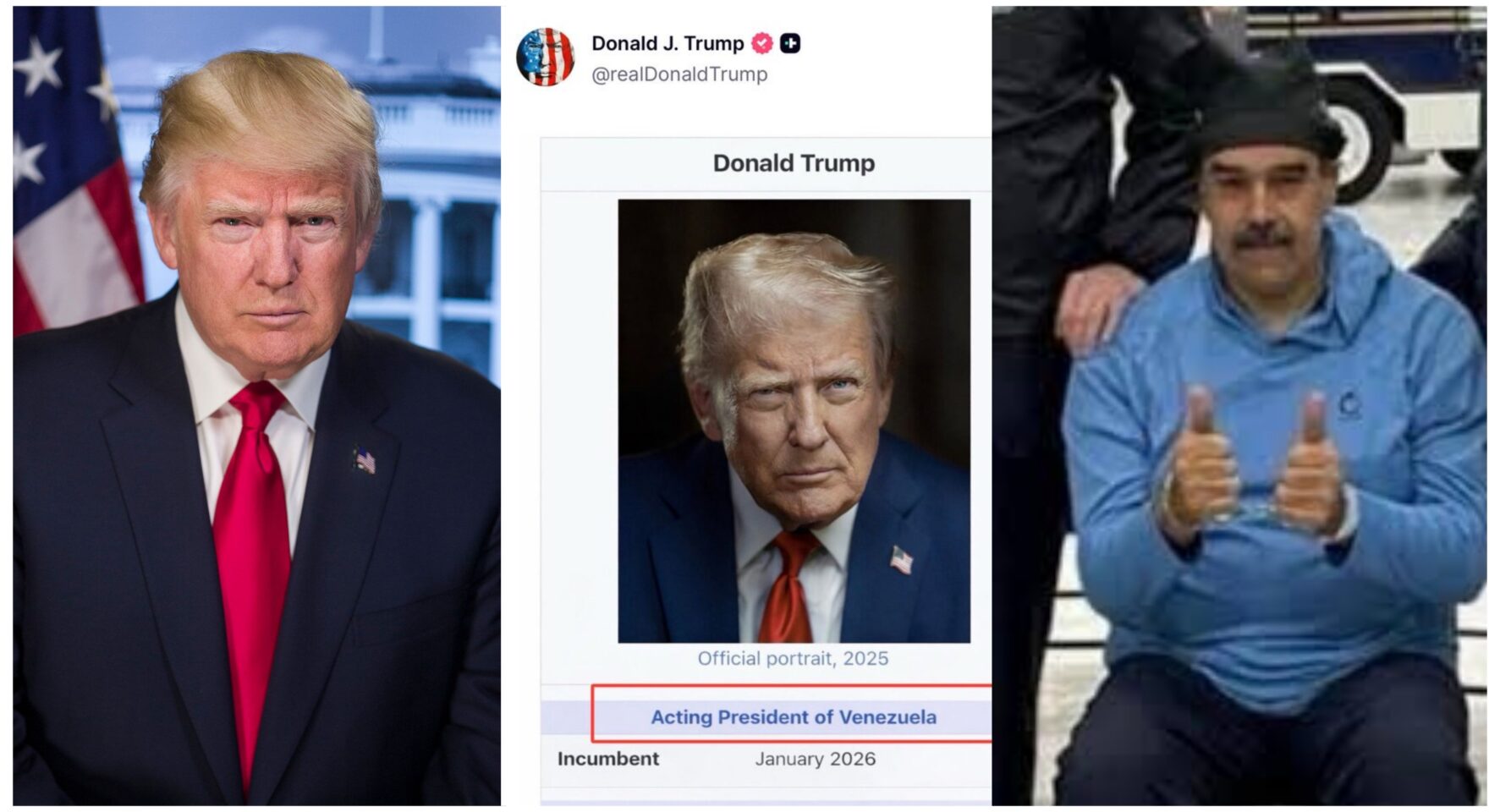
The United States (U.S.) President, Donald Trump, has triggered fresh debate and confusion across global political circles, following his recent controversial post about Venezuela Presidency.
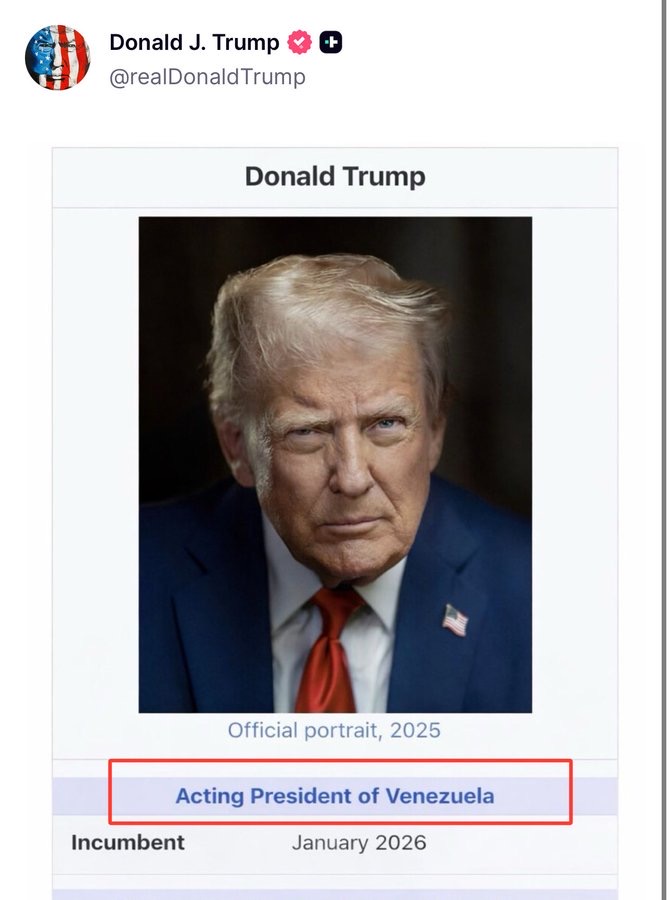
President Trump shared an image on his Truth Social platform showing himself as the “Acting President of Venezuela,” drawing strong reactions from diplomats and analysts.
Executive Order Raises Questions
The post came days after Trump signed an Executive Order declaring a national emergency linked to Venezuelan oil revenues held in U.S. Treasury accounts.
The White House said the order was designed to protect U.S. foreign policy and national security interests.
Under the directive, Venezuelan oil and diluent sale revenues deposited in U.S. accounts are shielded from court actions or legal seizure.
The funds, described as “Foreign Government Deposit Funds,” are to remain frozen unless specific authorisation is granted.
The order also blocks any transfer or dealings involving the funds and overrides earlier regulations affecting such transactions.
It further states the revenues remain Venezuela’s sovereign property, held in U.S. custody for diplomatic and governmental purposes, and cannot be claimed privately.
Security Warnings and Embassy Alerts
Meanwhile, the U.S. Embassy has repeated warnings about Venezuela’s fragile security situation.
In a January 10, 2026 alert, U.S. citizens were advised not to travel to Venezuela and to leave immediately if present.
The embassy recalled that since 2019, all diplomatic staff had been withdrawn from Caracas and consular services suspended.
Raid and Arrest Claims
Reports claim that on January 3, 2026, U.S. forces carried out a targeted operation in Caracas.
The mission allegedly resulted in the capture of President Nicolás Maduro and his wife, Cilia Flores.
More than 200 U.S. Special Operations personnel reportedly took part in the pre-dawn raid, focused on the Fort Tiuna military complex.
Accounts suggest Maduro and Flores were removed from their residence and transferred to a U.S. naval vessel.
While no U.S. casualties were reported, several Venezuelan security officers and Cuban personnel were said to have been killed.
Political Fallout in Caracas
Following the operation, Vice President Delcy Rodríguez was sworn in as acting president by Venezuela’s National Assembly.
She condemned the action as a “kidnapping” and a serious breach of national sovereignty.
U.S. officials described the operation as a law enforcement action tied to long-standing criminal allegations.
An indictment unsealed in New York charged Maduro and Flores with narco-terrorism, drug trafficking and weapons offences.
U.S. prosecutors alleged Maduro led a drug-linked government in cooperation with international cartels.
Both defendants pleaded not guilty in a Manhattan federal court on January 5.
Shift Towards Oil and Influence
After the arrests, observers noted a shift in U.S. messaging from criminal justice to economic and geopolitical interests.
President Trump stated the U.S. would oversee Venezuela’s affairs until a power transition occurred.
Soon after, meetings were reportedly held with U.S. oil executives to discuss reviving Venezuela’s energy sector.
The Department of Energy signalled a possible easing of sanctions to allow limited oil sales.
Critics argued the focus on oil reserves suggested strategic interests outweighed the original anti-drug justification.